Best Mattress for Rental Properties & Airbnb: A Practical Guide
Share
Fact checked
Reviewed by experts
 Writers at Sleep Authority are supported by a research team conducting in-depth research about the topics. The editorial team reviews them for accuracy and facts to ensure the most authentic and accurate content is published. Sleep Authority does not offer any medical advice, and you should not rely solely on our content for your course of treatment. Consult your medical professional to discuss any health concerns, chronic conditions, treatment options, or diagnoses.
Updated
November 6, 2025
Quick read
11 mins to read
List of Content
Buying a mattress for your rental property or Airbnb isn’t quite the same as choosing one for your own bedroom. You’re not shopping for your personal preference, but investing in something that needs to keep a rotating cast of guests comfortable enough to leave positive reviews. Not to mention, every mattress you purchase should ideally last through years of heavy use.
The mattress you choose directly impacts your bottom line. Industry research shows that 70% of hotel guests prioritize sleep quality during their stay, and uncomfortable sleep surfaces consistently appear among top complaints in vacation rental reviews. At the same time, a mattress that sags or degrades quickly means you’ll be replacing it far sooner than planned, turning initial savings into recurring costs.
Here’s what matters most: finding a mattress that will accommodate diverse sleep preferences, withstand continuous use, and deliver long-term value. This guide will break down the key features, materials, and considerations that affect how different mattresses perform in rental settings.
Why Mattress Quality Matters in Rental Properties
Sleep quality directly influences guest satisfaction in short-term rentals. Research indicates that comfort—especially mattress comfort—ranks as the most important factor for good sleep away from home, with 31.1% of travelers selecting it over temperature, quietness, and other factors.
The relationship between mattress quality and rental income is straightforward. Properties with comfortable mattresses receive higher ratings, which translates to better visibility in search results, higher booking rates, and the ability to maintain competitive pricing. Industry analysis shows that sleep quality is a top factor influencing guest satisfaction and return rates, with hotels and rental properties increasingly investing in premium mattresses to differentiate their properties.
Unlike mattresses in private homes, rental mattresses face unique operational challenges. They need to work reasonably well for side sleepers, back sleepers, and stomach sleepers alike. They should be able to support varying body weights without excessive sagging. And they must maintain these qualities, despite continuous occupancy with minimal recovery time between guests.
Additionally, you need a mattress that facilitates cleaning between guests while resisting odor retention and moisture accumulation. Materials that naturally resist allergens and permit effective sanitization will help you maintain a hygienic sleep environment across multiple occupancies without excessive effort.
The cheapest mattress upfront isn’t always going to be the smartest investment. A moderately priced mattress that maintains comfort and support for 5-7 years will likely cost less over time than a budget option that needs replacing every 2-3 years. When you factor in the operational disruption of replacements — coordinating deliveries, disposing of old mattresses, potentially blocking booking dates — the true cost of frequent replacements is even clearer.
Essential Features for Rental Property Mattresses
Certain mattress characteristics consistently prove valuable in rental environments, affecting both guest satisfaction and how long your mattress lasts.
Medium-Firm Support
Sleep researchers consistently identify medium-firm mattresses—typically rated 5-7 on a 10-point firmness scale—as providing optimal spinal alignment for the broadest range of sleepers. A landmark 2003 study published in The Lancet evaluated 313 patients with chronic low-back pain and found that those sleeping on medium-firm mattresses had significantly better outcomes for pain in bed, pain on rising, and disability compared to those on firm mattresses.
This firmness range supports proper spinal alignment for back sleepers while providing sufficient contouring for side sleepers’ shoulders and hips. Stomach sleepers also receive adequate support to prevent excessive lower back arching. The medium-firm range represents a practical compromise when you’re accommodating guests with unknown preferences.
Worth noting: You won’t please everyone. Some guests prefer softer mattresses, others want firmer support. But medium-firm consistently satisfies the majority, which is what we recommend optimizing for.
Durable Construction Materials
Your rental mattress needs materials that resist permanent compression and maintain their structure despite continuous use. High-density foams — typically 4 pounds per cubic foot or higher in memory foam layers — bounce back more effectively than lower-density alternatives and resist the formation of permanent body impressions.
Individually-wrapped coils offer significant durability advantages in innerspring and hybrid mattresses. Since each coil compresses independently (as opposed to interconnected coils, which move together), they distribute stress more evenly across the mattress and prevent premature wear. This construction also reduces motion transfer between sleeping partners, which matters in shared accommodations.
Effective Motion Isolation
Motion isolation refers to a mattress’s ability to absorb movement without transmitting it across the sleep surface. This significantly affects sleep quality when couples share the bed. Memory foam excels at motion isolation due to its viscoelastic properties, which absorb and dissipate energy rather than transfer it. Hybrid mattresses with individually-wrapped coils also perform well, as each coil moves independently.
Traditional interconnected coil systems transfer motion more readily, potentially disturbing partners during position changes. For properties that frequently accommodate couples, good motion isolation reduces sleep disruptions and the complaints that follow.
Temperature Regulation
Temperature management affects sleep quality more than many property owners realize. Your body’s core temperature naturally decreases during sleep, and mattresses that trap heat can interfere with this process. Research consistently shows that temperature disregulation disrupts sleep quality and reduces time spent in restorative deep sleep stages.
Several materials and features help manage temperature:
Gel-infused memory foam uses gel particles to conduct heat away from your body more effectively than standard memory foam. Phase-change materials absorb and release heat to maintain more consistent temperatures throughout the night. Natural latex possesses inherent breathability that prevents heat buildup. Hybrid mattresses benefit from air circulation through their coil systems, which helps dissipate both heat and moisture.
Breathable cover fabrics, like cotton, rayon, or certain synthetic blends, have also been shown to help regulate temperature and improve airflow.
Strong Edge Support
Edge support refers to how well the mattress perimeter resists compression and maintains its structure. Strong edge support provides several practical advantages in rental settings. It prevents premature edge sagging, which reduces the mattress’s usable surface area. It also allows guests to sit comfortably on the bed’s edge when putting on shoes or reading — which is particularly relevant in smaller guest rooms where the bed might serve multiple purposes.
Mattresses achieve edge support through reinforced coil perimeters or high-density foam rails. Hybrid mattresses typically offer superior edge support compared to all-foam constructions due to coil systems’ inherent structural advantages.
Mattress Types and Their Rental Applications
We’ve talked a bit about different mattress constructions, but let’s dive into their distinct advantages (or disadvantages) for rental environments. Understanding these differences will help you identify which type best suits your specific property needs.
Hybrid Mattresses
Hybrid mattresses combine foam comfort layers with innerspring support systems, typically using individually-wrapped coils to enhance support and motion isolation. This construction integrates the pressure-relieving properties of foam with the structural support, breathability, and edge stability of coils.
Hybrid coil systems promote airflow, which helps with temperature regulation and moisture dissipation. This breathability becomes particularly relevant in humid climates or properties without climate control between guest stays. Individually-wrapped coils also provide better motion isolation than traditional innerspring designs, as each coil responds independently to pressure.
Industry analysis of the hospitality mattress market indicates that hybrid designs are increasingly popular in accommodation settings due to their combination of comfort, durability, and broad appeal across diverse guest demographics.
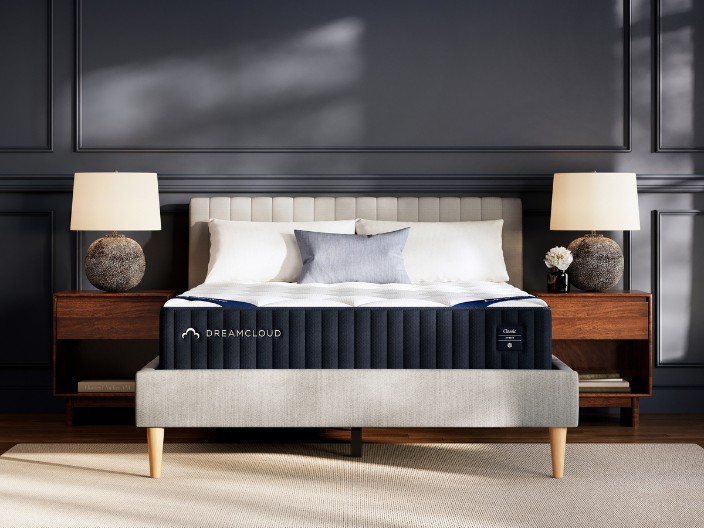
Luxury hybrid mattresses like DreamCloud combine pressure-relieving memory foam with individually-wrapped coils, delivering the support and motion isolation that makes them effective for couples seeking hotel-quality sleep. The coil support maintains spinal alignment while foam layers cushion pressure points, addressing multiple comfort requirements simultaneously.
Hybrid mattresses typically weigh more than all-foam alternatives, which affects handling during installation or rotation. However, this weight often correlates with substantial construction that supports long-term durability.
Memory Foam Mattresses
Memory foam mattresses use viscoelastic polyurethane foam that conforms to body contours in response to heat and pressure. This material excels at pressure point relief by distributing body weight across a larger surface area, reducing stress on shoulders, hips, and other prominent contact points.
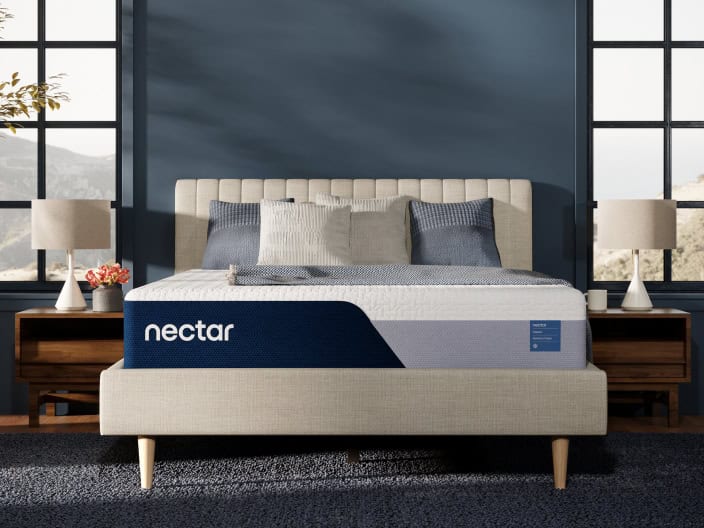
Memory foam naturally absorbs motion, which is why mattresses like Nectar perform well for couples who are easily disturbed by their partner’s movement. Multiple specialized layers provide pressure relief and motion isolation, while still providing at an accessible price point.
Temperature retention is a consideration with memory foam. The material’s dense cellular structure can trap body heat, potentially causing discomfort for temperature-sensitive sleepers. Modern memory foam formulations address this through gel infusions, cooling fibers, or phase-change materials that enhance heat dissipation. When you’re selecting memory foam mattresses for rentals, prioritizing models with documented cooling technologies helps reduce heat-related guest complaints. This is a big reason why we love Nectar, as they have some of the best cooling technology on the market.
Foam density significantly affects longevity in rental applications. High-density memory foam (4+ pounds per cubic foot) maintains its structural properties longer than lower-density alternatives, and resist the standard compression and softening that occurs with heavy use.
Memory foam mattresses typically provide weaker edge support than hybrid or innerspring options due to the absence of perimeter reinforcement. This may affect seated comfort at the bed’s edge and can accelerate edge compression over time.
Innerspring Mattresses
Traditional innerspring mattresses use coil systems topped with foam or fiber padding. Modern innerspring designs often employ individually-wrapped coils, which improve motion isolation and durability compared to older bonnell coil systems.
Innerspring mattresses offer excellent breathability due to open space within the coil system, promoting air circulation that prevents heat and moisture accumulation. They typically provide strong edge support through reinforced coil perimeters, maintaining structural integrity even with repeated edge use.
The responsiveness of innerspring mattresses—their immediate return to original shape after compression—appeals to sleepers who prefer a “sleeping on” rather than “sleeping in” sensation. This characteristic also facilitates movement and repositioning during sleep.
Quality varies significantly within the innerspring category. Coil gauge (thickness), coil count, and padding quality all affect comfort and durability. For rental applications, individually-wrapped coils with substantial padding layers provide better motion isolation and comfort than basic interconnected coil systems.
Natural and Organic Mattresses
Natural mattresses constructed from organic latex, cotton, and wool appeal to environmentally conscious guests and those with chemical sensitivities. Natural latex mattresses like Awara feature GOLS-certified organic Dunlop latex paired with organic cotton and wool, meeting rigorous environmental standards through third-party certifications while providing responsive, breathable support without synthetic foams or chemical treatments.
Organic latex possesses natural antimicrobial and hypoallergenic properties, resisting dust mites and microbial growth without chemical treatments. This inherent resistance to allergens makes natural mattresses particularly suitable for guests with allergies or sensitivities.
Wool serves as a natural fire retardant, eliminating the need for chemical flame retardant treatments. It also regulates temperature and wicks moisture, contributing to comfortable sleep across varying conditions. Organic cotton provides breathability and softness while meeting stringent certification standards for pesticide-free cultivation.
The certifications associated with natural mattresses — including GOLS (Global Organic Latex Standard), GOTS (Global Organic Textile Standard), and FSC (Forest Stewardship Council) — provide third-party verification of material sourcing and manufacturing processes. These certifications offer transparency that supports informed purchasing decisions.
Natural and organic mattresses typically command higher prices than conventional options. For properties targeting eco-conscious travelers or positioning themselves as environmentally responsible, this premium may align with brand values and guest expectations. For standard rental applications, you’ll need to weigh whether the additional cost provides proportional returns.
Material Certifications and Safety Standards
Third-party certifications provide verification of material safety, environmental responsibility, and manufacturing quality. Understanding these certifications helps you identify mattresses that meet specific standards—and gives you reassurance about what your guests are sleeping on.
CertiPUR-US certification applies to polyurethane foams, verifying that foams are manufactured without ozone depleters, mercury, lead, and other heavy metals; formaldehyde; phthalates; and certain flame retardants. The certification also establishes low VOC (volatile organic compound) emissions standards, reducing potential off-gassing concerns. For rental properties, CertiPUR-US certification provides baseline assurance of foam safety. Budget-friendly mattresses like Siena demonstrate that CertiPUR-US certified foams and quality construction—including gel-infused memory foam for cooling and multiple support layers—are available at accessible price points.
OEKO-TEX Standard 100 certifies that textiles and fabrics contain no harmful substances. This applies to mattress covers, ticking, and other textile components, ensuring that materials contacting skin meet stringent safety criteria.
GOLS (Global Organic Latex Standard) certifies organic latex content and processing. This certification requires that latex contains at least 95% certified organic raw material and that processing facilities meet environmental and social responsibility criteria.
GOTS (Global Organic Textile Standard) certifies organic fibers and textiles, including cotton and wool. This certification covers both organic cultivation practices and socially responsible manufacturing conditions.
FSC (Forest Stewardship Council) certification applies to wood-based materials and verifies responsible forest management practices. This may apply to mattress foundations or packaging materials.
These certifications provide transparency that supports informed decisions, particularly for properties emphasizing health, safety, or environmental values. That said, you don’t need every certification—just the ones relevant to your specific mattress type and property positioning.
Maintenance and Longevity Considerations
Proper maintenance extends your mattress lifespan and maintains comfort levels across multiple guest occupancies. Here’s what actually matters.
Mattress Protectors
Waterproof, breathable mattress protectors serve as essential barriers against spills, stains, and allergen accumulation. Quality protectors feature polyurethane or similar waterproof membranes that block liquids while allowing water vapor to escape, preventing moisture buildup that can degrade mattress materials or promote microbial growth.
You should remove and launder protectors between guest stays or whenever contamination occurs. Select protectors that withstand frequent washing without deteriorating—this ensures consistent protection over time without constant replacements.
Inspection and Replacement Criteria
Regular inspection identifies developing issues before they affect guest comfort or show up in reviews. Check for:
- Visible sagging or indentations exceeding 1.5 inches, which indicate structural failure
- Surface damage like tears, permanent stains, or odors that persist despite cleaning
- Reduced comfort or support, even without visible damage
- Edge collapse or excessive softening in high-use areas
Proactive replacement based on these criteria maintains guest satisfaction and prevents negative reviews related to mattress quality. Most rental mattresses require replacement every 5-7 years, though this varies based on your occupancy rates and initial quality.
There are quite a few mattress companies that offer impressive warranties for standard wear and tear (including all of the ones we’ve recommended here). It’s a definite bonus when you’re planning for long-term use.
Investment Considerations and Price Ranges
Mattress pricing varies substantially based on materials, construction complexity, and brand positioning. Understanding what different price ranges typically offer helps you establish appropriate budget expectations for your specific situation.
Entry-level options ($300-$600) typically feature basic foam constructions or simplified hybrid designs with fewer comfort layers. These mattresses often use CertiPUR-US certified foams and provide adequate support for lighter use or properties with lower occupancy rates. Expected lifespan in rental environments typically ranges from 3-5 years. Entry-level pricing may be appropriate when you’re outfitting multiple units simultaneously or when budget constraints are significant. Our favorite entry-level options are from Siena Sleep, whose taller models rival the base Nectars when it comes to comfort – an impressive feat.
Mid-range selections ($600-$1,200) offer enhanced materials, additional comfort layers, and improved durability features. This range typically includes quality hybrid constructions with individually-wrapped coils, gel-infused memory foam, and reinforced edge support. Expected lifespan extends to 5-7 years with proper maintenance. Mid-range mattresses balance initial investment with long-term performance for most rental applications.
Premium options ($1,200 and above) incorporate advanced materials like organic latex, phase-change cooling technologies, or luxury foam formulations. These mattresses often include comprehensive warranties and extensive sleep trial periods. Expected lifespan may reach 7-10 years. Premium pricing makes most sense for luxury properties where mattress quality directly supports brand positioning and guest expectations.
Here’s the thing: The total cost of ownership—combining purchase price, expected lifespan, and replacement frequency—provides more meaningful financial analysis than initial cost alone. A mattress that costs twice as much but lasts twice as long provides equivalent value while reducing the operational disruption of frequent replacements.
Selection Criteria Checklist
When you’re evaluating mattresses for your rental property, these criteria help identify suitable options:
Essential features:
- Medium-firm feel (5-7 on firmness scale) for broad appeal
- Minimum 10-inch profile for adequate support layer depth
- High-density foams (4+ pounds per cubic foot) or robust coil systems
- Temperature management features (cooling fibers, breathable covers, or airflow designs)
- CertiPUR-US certification for foam components
- Sleep trial period allowing returns or exchanges
- Warranty coverage of at least 10 years
Beneficial additions:
- Reinforced edge support for longevity
- Multiple foam layers with distinct functions
- Organic or eco-friendly certifications
- Documented motion isolation performance
Red flags to watch for:
- Absence of material certifications
- Extremely low pricing relative to market standards without clear explanation
- Thin profile (under 10 inches) suggesting inadequate support layers
- No warranty or return policy
- Vague or absent material specifications
Mattress Selection by Property Type
Different rental property types benefit from specific mattress characteristics based on their guest demographics and operational models.
Urban Airbnb units (studios and one-bedrooms) typically accommodate couples or business travelers expecting hotel-comparable comfort. Hybrid mattresses with strong motion isolation and temperature regulation address these expectations effectively. Medium-firm comfort levels satisfy most guests while maintaining professional quality standards.
Family vacation rentals experience varied use patterns and higher physical stress from children and multiple occupants. Durability becomes your primary consideration, making resilient hybrid constructions or quality innerspring mattresses appropriate choices. The medium-firm range continues to serve diverse age groups and body types effectively.
Luxury or boutique properties position themselves on exceptional guest experiences, making mattress quality a brand differentiator. Premium hybrid constructions or organic latex mattresses align with guest expectations for high-end properties. The additional investment supports your premium pricing structure and contributes to guest satisfaction metrics that justify higher rates.
Extended-stay or corporate housing serves guests occupying units for weeks or months, approaching residential use patterns. These properties benefit from mattresses offering both durability and consistent comfort over extended periods. Mid-range hybrid mattresses balance initial cost with the longevity needed for longer occupancy periods.
Multiple-unit operations managing numerous properties simultaneously require consistency across units and cost-effective procurement. Standardizing on a specific mattress model simplifies inventory management and replacement planning. Bulk purchasing at the mid-range price point often provides optimal value while maintaining quality standards across properties.
Conclusion
Selecting an appropriate mattress for your rental property requires balancing durability, comfort, hygiene, and cost. The relationship between mattress quality and your guests’ satisfaction directly affects your review ratings, repeat bookings, and overall property reputation. Investing in appropriate mattress quality — matched to your property positioning and guest expectations — will be sure to support your operational success.
You should evaluate mattress options based on your specific circumstances: guest demographics, occupancy patterns, budget constraints, and brand positioning. The frameworks and criteria outlined in this guide provide a foundation for making informed decisions that balance immediate costs with long-term value, ultimately supporting both guest satisfaction and sustainable rental operations.
This website does not offer medical advice nor professional medical services; rather, it is provided solely for educational, informational, and/or entertainment purposes. Individuals seeking medical advice should consult a licensed physician. The information provided should not be used for diagnosis or treatment of any condition, disease, or injury. When you have a medical condition, you should always talk to licensed doctor or other certified medical professional. You should never delay seeking professional medical advice or treatment based on the contents of this website. Call 911 or immediately go to the nearest emergency room if you think you may have a medical emergency. The contents of this website are provided “as-is”, Sleep Authority and its parent, subsidiaries, affiliates, employees, contributors disclaim any warranty of the information contained herein. Please contact using contact form to report any errors, omissions, misinformation, or abuse.