Memory Foam vs Hybrid Mattresses: Choosing the Best for Your Sleep Health
Share
Fact checked
Reviewed by experts
 Writers at Sleep Authority are supported by a research team conducting in-depth research about the topics. The editorial team reviews them for accuracy and facts to ensure the most authentic and accurate content is published. Sleep Authority does not offer any medical advice, and you should not rely solely on our content for your course of treatment. Consult your medical professional to discuss any health concerns, chronic conditions, treatment options, or diagnoses.
Updated
November 13, 2025
Quick read
7 mins to read
List of Content
Memory Foam vs Hybrid Mattresses: Which Is Better for Your Sleep Health?
Choosing between memory foam and hybrid mattresses is one of the most common decisions you’ll face during mattress shopping — and one that’s critical for your sleep quality and overall health. The question “which is better?” doesn’t have a one-size-fits-all answer. Rather, it depends on your sleep preferences, body type, and specific health considerations. Memory foam mattresses are renowned for their pressure-relieving contouring properties, while hybrid mattresses combine foam with coil support to enhance responsiveness and airflow. Understanding the science behind both types will help you make an informed choice that supports restorative, pain-free sleep.
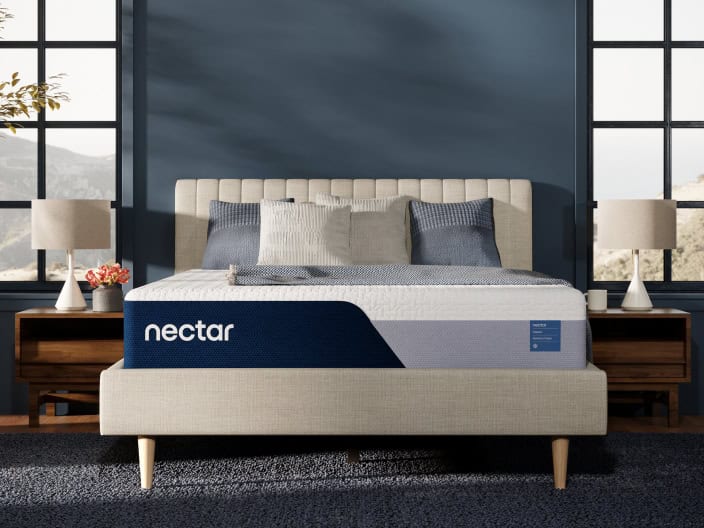
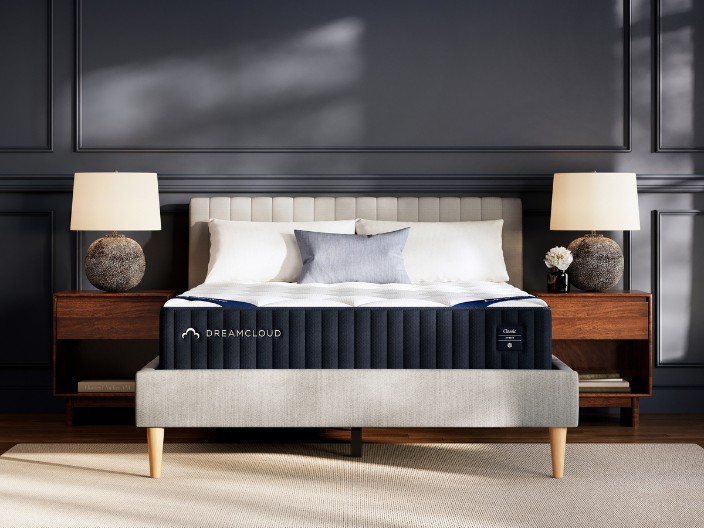
This article will break down memory foam and hybrid mattress, touching on their construction, comfort benefits, and temperature regulation properties, among others. Along the way, we’ll reference two of our favorite mattress brands – Nectar’s memory foams and the DreamCloud hybrids – to illustrate key concepts and technology in practice. By the end, you’ll have a clear grasp of which mattress type is better aligned with your sleep health needs.
Understanding Mattress Construction: Memory Foam vs Hybrid
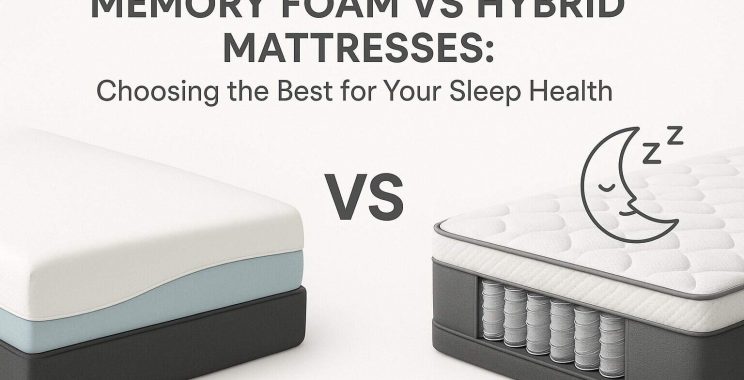
The fundamental difference between memory foam and hybrid mattresses lies in their internal structure. Memory foam mattresses consist entirely of layers of foam, which react to your body heat and pressure to conform closely to your body’s shape. Hybrid mattresses, in contrast, combine memory foam or latex comfort layers atop an innerspring support core, typically made of individually wrapped coils (also called pocketed coils).
Memory Foam Mattresses: How They Work
Memory foam is designed to provide deep contouring by temporarily compressing under pressure and heat, then returning to its original shape when weight is removed. This creates a cradling sensation that distributes body weight evenly, reducing stress on sensitive joints such as the shoulders, hips, and lower back. High-quality memory foam typically measures at densities of 3-5 pounds per cubic foot (pcf), which correlates with durability and support. For example, Nectar mattresses feature multiple layers including gel-infused memory foam at about 4.5 pcf, combining pressure relief with temperature regulation.
One key characteristic of memory foam is its excellent motion isolation: the mattress’s ability to absorb movement and prevent it from transferring across the surface. This quality benefits couples or light sleepers who are easily disturbed by their partner’s movements.
Hybrid Mattresses: Combining Foam with Coil Support
Hybrid mattresses integrate the contouring comfort of memory foam layers above a supportive core of individually wrapped coils. These coils provide targeted support and help maintain proper spinal alignment by resisting compression better than foam alone. The pocketed coils also reduce motion transfer more effectively than traditional innerspring systems because each coil moves independently. The DreamCloud hybrid mattress illustrates this design, with multiple foam layers atop a zoned coil system that adapts support according to pressure needs across the body.
Hybrids also tend to offer superior edge support compared to all-foam beds. This means you can sit or sleep near the mattress edge without feeling like you’ll roll off—an important feature for people who share a bed or have limited bedroom space.
Pressure Relief and Spinal Alignment: What Science Shows
Proper spinal alignment and pressure relief are essential for avoiding chronic aches and improving sleep quality. Research indicates medium-firm mattresses, which provide balance between cushioning and support, produce the best outcomes for back pain sufferers [Study: The Lancet, 2003]. Both memory foam and hybrid mattresses can meet this medium-firm ideal, but differences in how they achieve it may impact your comfort.
Memory foam excels in contouring to the body’s curves, which reduces peak pressure points — especially beneficial for side sleepers who put more weight on their hips and shoulders. A study from the National Sleep Foundation highlights that adequate pressure dispersion can reduce nighttime tossing and turning by nearly 30%, promoting deeper stages of restorative sleep [Study: National Sleep Foundation, 2017]. Memory foam mattresses like Nectar leverage gel infusion and specialized layering to simultaneously address pressure and heat buildup, common concerns with foam beds.
Hybrid mattresses enhance spinal support by combining foam comfort with coil responsiveness. The coils provide targeted pushback against heavier body areas like the lower back while foam layers cushion softer tissues. This multi-layer support has been shown to help maintain natural spinal curvature better than traditional mattresses, which is key in reducing musculoskeletal pain and morning stiffness [Study: Journal of Clinical Sleep Medicine, 2011]. This dual support also benefits back and stomach sleepers who require a firmer surface that avoids excessive sinking.
Motion Isolation and Sleep Disturbance
Motion isolation is another critical consideration in mattress choice, especially for couples or light sleepers. Memory foam’s dense, viscoelastic properties excel at absorbing movement, which limits disturbances across the sleeping surface. This means if your partner moves or gets up during the night, you’re less likely to feel it.
Hybrid mattresses with individually wrapped coils also provide solid motion isolation by preventing coil jarring and limiting vibration spread, although they generally don’t match memory foam’s level of motion absorption. Sleep authority research has found that premium hybrid mattresses such as DreamCloud’s models come remarkably close in minimizing partner disturbance thanks to careful coil zoning and multiple foam layers.
For those prioritizing minimal night interruptions, memory foam is often preferable. However, hybrids offer a better combination for sleepers who want both motion isolation and the support or bounce that foams alone might lack.
Temperature Regulation: Foam vs Hybrid Cooling Performance
Heat retention is a common complaint with memory foam mattresses, as dense foam can limit airflow, causing sleepers to feel uncomfortably warm during the night. This is especially a concern for people who run hot or live in warmer climates. Manufacturers have addressed this issue by introducing gel gel-infused foams, phase change materials, and open-cell foam technologies to enhance cooling.
For instance, Nectar’s memory foam layer includes gel infusion and cooling fibers in the cover that actively wick away moisture and dissipate heat, which is why Nectar performs well despite foam’s typical heat retention. Research shows that better temperature regulation correlates with longer total sleep time and less frequent awakenings [Study: Journal of Physiological Anthropology, 2018].
Hybrid mattresses benefit from the inherent breathability of their coil cores, promoting more air circulation through the mattress than all-foam designs. This airflow helps transport heat away from the body, keeping sleepers cooler during the night. The DreamCloud hybrid integrates cooling technology in its foam layers while leveraging airflow between coils, resulting in a more neutral sleep temperature for many people.
In summary, if temperature regulation is your priority, hybrid mattresses generally offer an advantage due to coil cores facilitating airflow, but memory foam mattresses with advanced cooling features can rival hybrids in this aspect.
Durability and Longevity Considerations
Durability is essential since mattresses are long-term investments. Memory foam can develop impressions or sag in high-use areas, especially if lower density foam is used. Higher-density memory foam, like in Nectar mattresses, tends to last longer, maintaining support and shape for years. Proper base support underneath is also crucial to avoid premature wear.
Hybrid mattresses typically combine the durability of steel coils with foam layers, which can enhance lifespan if premium components are used. The coils provide steady support even as foam layers age, reducing the likelihood of deep sagging. However, low-quality coils or inadequate coil count can affect durability negatively. DreamCloud’s hybrid line uses individually wrapped coils and zoned support to enhance long-term performance.
We recommend considering the specific materials and certifications involved, such as CertiPUR-US foam certification that ensures low emissions and durability standards. Siena mattresses showcase how budget-friendly options can still provide CertiPUR-US certified foam and reliable durability at accessible price points.
Suitability for Different Sleep Positions and Body Types
Your typical sleep position and body type significantly influence mattress suitability. Side sleepers benefit most from mattresses that contour deeply to relieve pressure on shoulders and hips. Memory foam’s conforming surface is ideal here, providing gentle cushioning that helps prevent numbness and stiffness.
Back and stomach sleepers generally require firmer support to maintain neutral spine alignment and prevent excessive sinking, which can cause lower back pain. Hybrid mattresses with coils provide the responsive pushback needed in these areas, reducing the risk of spinal misalignment.
Heavier individuals may also find hybrid mattresses more supportive because coil systems can better resist compression under increased weight load, maintaining comfort and safety. However, high-density memory foam layers designed for pressure relief for heavier sleepers are also effective when properly constructed.
Overall, mattress choice should reflect your unique sleep mechanics, health concerns, and preferences rather than a simple “foam vs hybrid” dichotomy.
Environmental and Health Considerations
Beyond comfort and support, some sleepers are concerned about chemical exposure and environmental impact. Memory foam is usually polyurethane-based and often contains additives like flame retardants and VOCs (volatile organic compounds) from manufacturing. Look for certifications such as CertiPUR-US, which verifies low emissions and safer foam content.
Hybrid mattresses also rely on synthetic foams and coils, but some brands integrate organic or natural materials to reduce chemical exposure. Awara mattresses, for example, feature GOLS-certified organic Dunlop latex over coil support, combined with organic cotton and wool. Their certification ensures strict environmental and health standards, including chemical-free fire retardancy and hypoallergenic materials. This makes them an excellent example for sleepers seeking eco-friendly hybrid options.
Price and Value Considerations
Memory foam mattresses cover a broad price range, from budget to luxury. All-foam mattresses tend to be more affordable due to simpler construction. Hybrid mattresses usually command a higher price point because of more complex assembly and materials, especially when featuring advanced coil systems and premium foams.
Brands like Siena demonstrate that quality memory foam and hybrids can be accessed at budget-friendly prices without compromising safety or comfort, due to CertiPUR-US certified foams and gel memory layers. Meanwhile, premium offerings like DreamCloud present luxury hybrid options with hotel-quality features at accessible prices.
Value assessment should consider warranty length, sleep trial duration, material quality, and how the mattress meets your specific health and comfort needs rather than sticker price alone.
Key Takeaways: Memory Foam vs Hybrid Mattresses
- Memory foam mattresses provide superior pressure relief and motion isolation, making them well-suited for side sleepers and light sleepers sensitive to partner movement.
- Hybrid mattresses combine foam comfort with coil support, enhancing spinal alignment, responsiveness, airflow, and edge support, benefiting back and stomach sleepers as well as heavier individuals.
- Temperature regulation generally favors hybrids due to breathability of coils, though memory foam with cooling technology (like gel infusion) can rival hybrids.
- Durability depends on foam density and coil quality; premium memory foam and hybrid mattresses tend to last longer with less sagging.
- Environmental and health-conscious sleepers may prefer hybrid options using organic materials (e.g., Awara) or memory foam models with certifications ensuring low emissions and safe components.
Conclusion
Deciding between memory foam and hybrid mattresses hinges on your sleep position, comfort preferences, and health needs. Memory foam excels in contouring and motion isolation, which can reduce pressure-related discomfort and sleep disruption. Hybrids provide balanced support and enhanced cooling through coil systems, which help maintain spinal alignment and temperature neutrality. Recognizing how each mattress type addresses these factors empowers you to make a choice grounded in sleep science.
Ultimately, investing in a mattress that prioritizes your biomechanical and thermal comfort ensures more restful, restorative sleep that supports long-term health. When evaluating mattresses, focusing on materials, certifications, and construction quality alongside your personal preferences will be sure to guide you toward the best sleep surface for you.
This website does not offer medical advice nor professional medical services; rather, it is provided solely for educational, informational, and/or entertainment purposes. Individuals seeking medical advice should consult a licensed physician. The information provided should not be used for diagnosis or treatment of any condition, disease, or injury. When you have a medical condition, you should always talk to licensed doctor or other certified medical professional. You should never delay seeking professional medical advice or treatment based on the contents of this website. Call 911 or immediately go to the nearest emergency room if you think you may have a medical emergency. The contents of this website are provided “as-is”, Sleep Authority and its parent, subsidiaries, affiliates, employees, contributors disclaim any warranty of the information contained herein. Please contact using contact form to report any errors, omissions, misinformation, or abuse.