Writers at Sleep Authority are supported by a research team conducting in-depth research about the topics. The editorial team reviews them for accuracy and facts to ensure the most authentic and accurate content is published. Sleep Authority does not offer any medical advice, and you should not rely solely on our content for your course of treatment. Consult your medical professional to discuss any health concerns, chronic conditions, treatment options, or diagnoses.

Choosing the best pregnancy pillow starts with naming your biggest discomfort. A U-shaped pillow supports your belly, back, and knees at once, a C-shaped pillow takes up less room, and a wedge targets one spot. Pick the shape first, then check the fill, cover, and size.
Key takeaways
- Side sleeping with bent knees is the position most pregnancy sleep guidance points to, and a pregnancy pillow makes it easier to hold that position.
- U-shaped pillows cover the most ground. C-shaped pillows and wedges save space.
- A regular pillow can work if you only need light support.
What Is a Pregnancy Pillow?
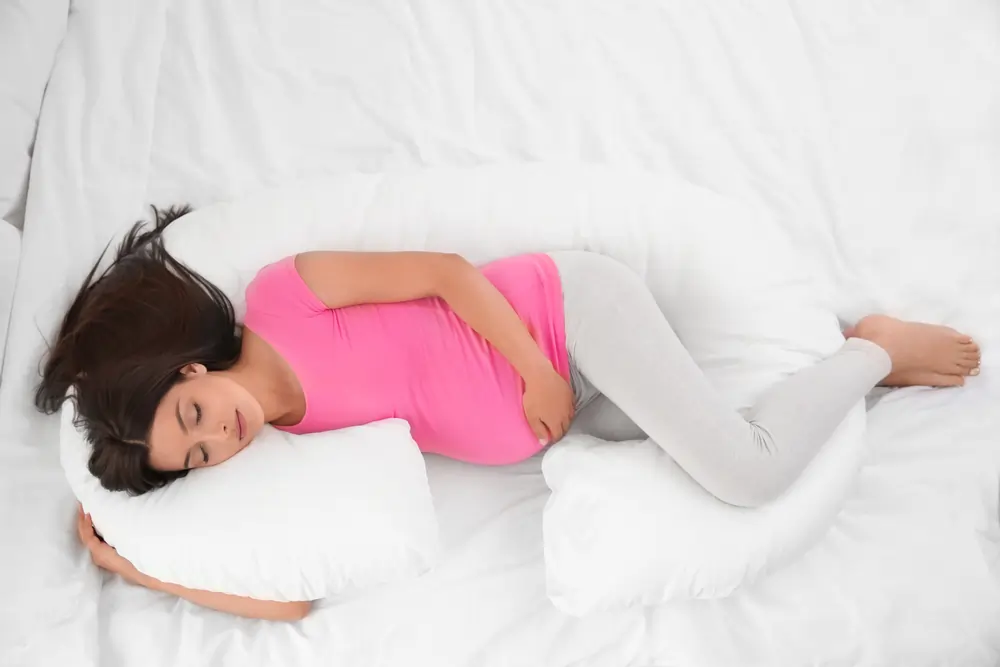
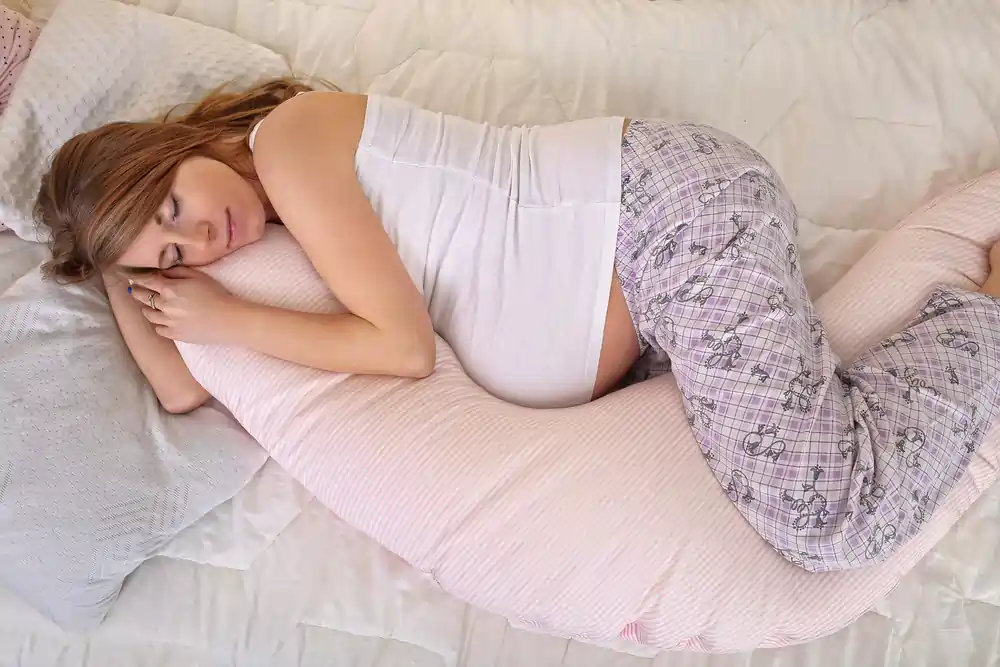
A pregnancy pillow is a long or shaped pillow that supports your belly, back, hips, and knees while you sleep on your side. The shapes differ mainly in how much of your body they cover (and how much bed they take up).
| Shape | Best for | Keep in mind |
|---|---|---|
| U-shaped | Full-body support for belly, back, hips, and knees | Takes up the most space in bed |
| C-shaped | Belly and back support in a smaller footprint | Supports fewer areas at once than a U |
| J-shaped or straight body pillow | Hugging and knee support | Offers less wraparound support |
| Wedge | Tucking under your belly or behind your back | Targets one spot, so you may want a second pillow |

Why Side Sleeping Matters During Pregnancy
As your uterus grows, lying flat on your back can press on the inferior vena cava (the large vein that returns blood from your lower body to your heart). UPMC reports that studies have linked back sleeping late in pregnancy, at 28 weeks or later, with adverse pregnancy outcomes. We cover positions by trimester in our guide to sleeping positions during pregnancy. This guide focuses on the pillows that make side sleeping easier.
Best Pregnancy Pillow for Side Sleeping
A pregnancy pillow for side sleeping should do three things: Lift your top knee, support your belly, and stay put when you shift. A full-length pillow can cover all three. If bed space is tight, a wedge under your belly plus a pillow between your knees works, too.
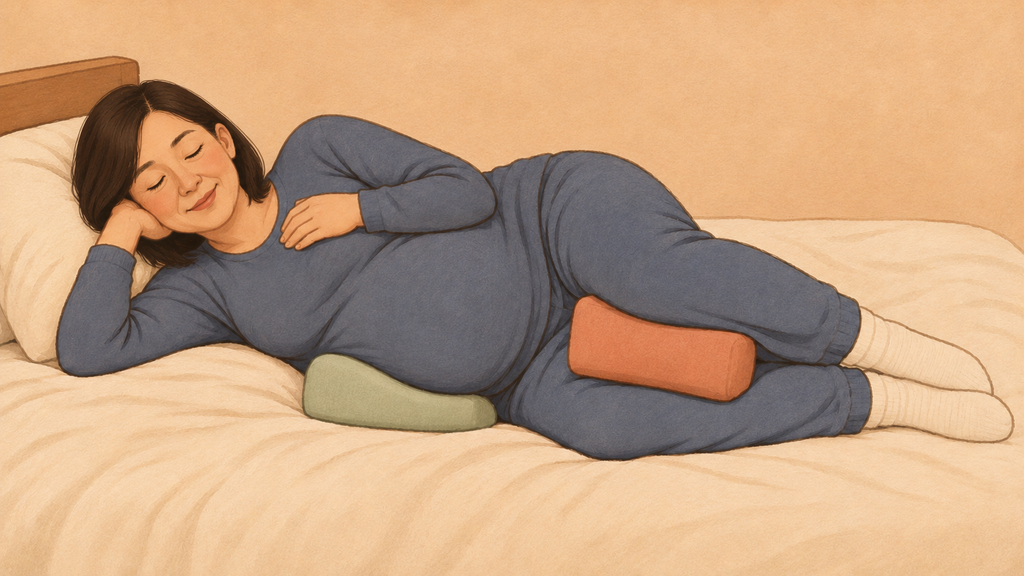
Mayo Clinic suggests placing pillows between your bent knees, under your stomach, and behind your back, and notes that full-length body pillows are available. To set up your own:
- Bend your knees and rest your top leg on the pillow so your hips stay level.
- Add support under your belly if it pulls when you lie down.
- Choose a pillow that holds its shape, so you aren’t rebuilding the setup every night.
Best Pregnancy Pillow for Back Pain and Hip Pain
For pregnancy back pain, look for belly support (it can ease the forward pull on your lower back) and a shape that keeps your spine and hips lined up. A U-shaped or C-shaped pillow with belly support covers both. A pillow between your knees can help keep your hips level. Your mattress also plays a part, and our guide to the best mattress for back pain explains how.
Know when a pillow isn’t enough. Mayo Clinic advises contacting your healthcare team if back pain lasts more than two weeks. Call right away if back pain comes with vaginal bleeding, fever, cramping or contractions, or burning when you urinate, since back pain can signal preterm labor or a urinary tract infection.
How to Choose a Pregnancy Pillow
Whether you call it a maternity pillow or a pregnancy support pillow, five checks can help you choose a pregnancy pillow:
- Name the problem. Belly weight, hip pressure, back strain, and overheating each point to a different shape.
- Measure your bed. A U-shaped pillow can claim half the mattress, so check the dimensions if you share the bed.
- Match the shape. Use the table in this article to help you choose the right pregnancy pillow shape for your needs.
- Check the fill and cover. The most comfortable pregnancy pillows balance soft contouring with enough firmness to keep their shape. A removable, washable cover and breathable fabric help if you run warm.
- Read the return policy. Comfort is personal, and a pillow is hard to judge in a store.
Newton Baby’s Pregnancy Pillow shows how these features come together. It is U-shaped (55 by 31 inches) with a memory foam and fiber cluster core. A detachable arm lets you switch to a J or C shape when bed space gets tight. The cover has a cotton surface and is machine washable, the foam is CertiPUR-US® certified, and Newton Baby offers a 30-day money-back guarantee. We appreciate that one pillow can change shape as your pregnancy and your bed situation change.
Pregnancy Pillow vs. Regular Pillow: Are Pregnancy Pillows Worth It?
A regular pillow can do the job. Mayo Clinic’s suggested setup uses standard pillows, and a pregnancy pillow packs the same support into one piece that stays in place. That’s the pregnancy pillow vs. regular pillow question in a sentence.
Stick with regular pillows if:
- You only need light support.
- Bed space is limited.
- You already sleep through the night.
Choose a pregnancy pillow if:
- You keep rolling onto your back.
- Your pillows slide away by morning.
- You want belly, hip, and back support together.
So are pregnancy pillows worth it? If you wake several times a night to reposition, a pregnancy pillow is likely to help. They do have limits: They take up space, they can run warm, and they can’t fix a mattress that doesn’t relieve pressure or address a medical issue that needs your provider.
When to Start Using a Pregnancy Pillow
Many people begin in the second trimester, when side sleeping starts to matter and hip and back strain builds. In early pregnancy, you may not need one until discomfort starts. To practice side sleeping early, a straight body pillow or wedge is a simple start. Choose one you can keep using as your belly grows.
Does Your Mattress Matter During Pregnancy?
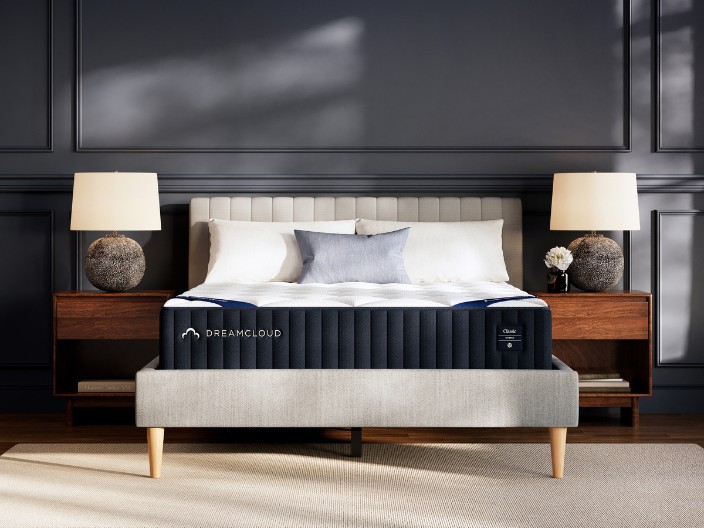
A pillow positions your body, but your mattress affects how much pressure lands on your hips and shoulders. The Nectar Luxe Hybrid pairs a cool-to-the-touch cover with contouring memory foam and has a medium-soft feel that Nectar recommends for side sleepers. Nectar’s 365-night home trial gives eligible customers up to a year to decide (see the trial terms). For firmness, cooling, and edge-support guidance, see our guide to the best mattress for pregnancy.
Finding the Right Support for Your Pregnancy
Match the shape to your biggest discomfort, measure your bed, and give the setup a few nights to get used to. A pillow handles positioning, and your mattress handles pressure, so the two work best together. For more on sleeping well through each trimester, check out our pregnancy and sleep tips.
Frequently Asked Questions
What is the best pregnancy pillow shape? A U-shaped pregnancy pillow gives the most full-body support, while a C-shaped pillow or wedge saves space. The right choice depends on your biggest discomfort and how much room you have in bed.
When should I start using a pregnancy pillow? Start when discomfort begins. Many people begin in the second trimester, when side sleeping becomes more important and hip and back strain tends to build.
How do you use a pregnancy pillow? Lie on your side with your knees bent and rest your top leg on the pillow. Position any belly or back support where you feel pulling, then adjust until your hips feel level.
Can a pregnancy pillow help with back pain? A pregnancy pillow can help you hold a supported side position, which Mayo Clinic notes many people find eases back pain. It doesn’t treat the cause, so call your healthcare provider if pain is severe, lasts more than two weeks, or comes with bleeding, fever, or contractions.
Can I use a regular pillow instead of a pregnancy pillow? Yes. Mayo Clinic’s suggested setup uses regular pillows between the knees, under the belly, and behind the back. A pregnancy pillow keeps that support in one piece.
Can I use a pregnancy pillow after the baby arrives? Often, yes. A U-shaped or C-shaped pregnancy pillow can become a nursing pillow when positioned correctly, as Newton Baby explains in its pregnancy pillow guide.