Writers at Sleep Authority are supported by a research team conducting in-depth research about the topics. The editorial team reviews them for accuracy and facts to ensure the most authentic and accurate content is published. Sleep Authority does not offer any medical advice, and you should not rely solely on our content for your course of treatment. Consult your medical professional to discuss any health concerns, chronic conditions, treatment options, or diagnoses.
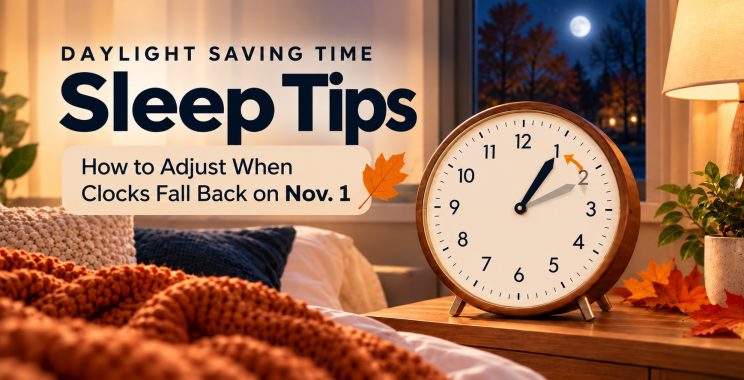
The extra hour is real, but so are earlier sunsets and a body clock that needs a few days to catch up. Here is how to handle the first week.
Daylight saving time ends at 2 a.m. on Sunday, November 1, 2026, when clocks fall back one hour to 1 a.m. You gain an hour on the clock that night, but you do not automatically get more sleep. That’s up to you! Going to bed at your usual time and getting morning light can help your body adjust over the next several days.
The fall change is usually gentler on sleep than the spring one, but it brings darker evenings and earlier sunrises, so your body clock will be initially out of sync with the wall clock. These daylight saving time sleep tips cover what is changing, who feels it most, and how to adjust.
Daylight Saving Time 2026 at a Glance
- Date: Sunday, November 1, 2026
- Time: 2 a.m. becomes 1 a.m.
- Direction: Clocks go back one hour, returning to standard time
- Who changes: Most of the United States, though Hawaii and most of Arizona stay on standard time year-round
- Next change: Daylight saving time returns on the second Sunday in March (March 14, 2027)
What Is Daylight Saving Time and Where Is It Used?
Daylight saving time (DST) moves clocks forward an hour in spring and back an hour in fall, shifting daylight toward the evening during warmer months. In the U.S., it starts on the second Sunday in March and ends on the first Sunday in November, according to Sleep Foundation’s daylight saving time guide.
Hawaii and most of Arizona skip it, along with American Samoa, Guam, the Northern Mariana Islands, and the U.S. Virgin Islands. Other countries follow different calendars. The European Union, for example, moved its clocks on October 25 this year.
Anyone with a fixed morning schedule will feel the change, but some people may notice it more:
- People who already cut sleep short for work or school. The Sleep Foundation article notes, “some studies suggest that certain people never fully acclimate to clock changes and daylight saving time.”
- Evening commuters. More of the drive home happens after dark.
- Early risers and households with young kids. Body clocks may wake people an hour earlier for several days.
When Daylight Savings Time Ends, Do You Get More Sleep?
Only if you protect your sleep. When clocks fall back, 2 a.m. becomes 1 a.m. again, so Saturday night is an hour longer on paper. Whether that becomes an extra hour of sleep depends on what you do with it.
A common mistake people make, according to Dr. Ilene Rosen, a former American Academy of Sleep Medicine (AASM) board member who was quoted by Resmed, is “’staying up later and thinking that they’re going to get an extra hour of sleep.’”
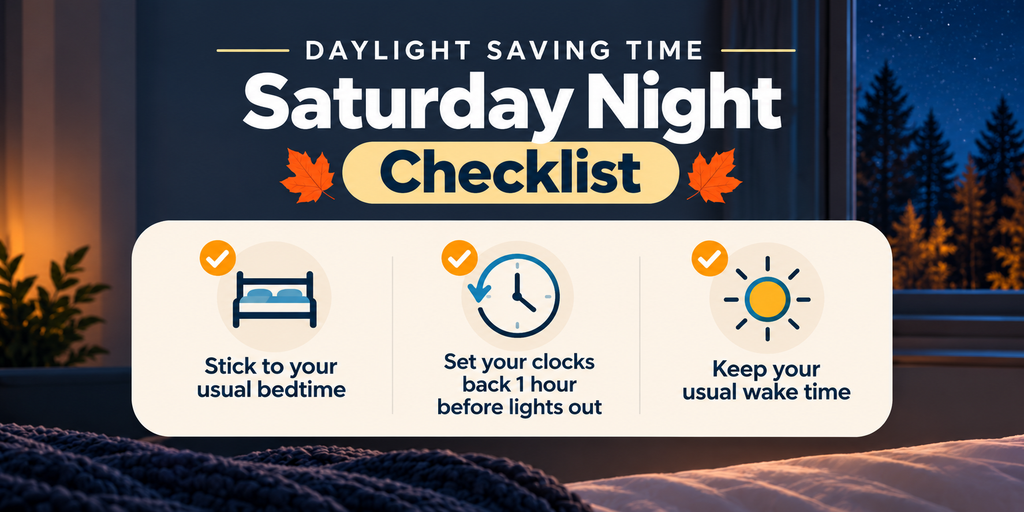
The American Academy of Sleep Medicine’s tip for sleep-deprived adults is simple:
- Follow your usual evening routine and go to bed at your usual time on Saturday, October 31.
- Set your clocks back one hour right before you turn out the lights.
- Wake up at your usual time on Sunday.
If you already sleep at least seven hours a night, treat the extra hour as a reason to keep your schedule steady rather than a chance to sleep in.
What Comes With the End of Daylight Saving Time
Three changes show up at once:
- Earlier darkness. Sunset shifts to an hour earlier on the clock, and days keep getting shorter into December.
- Earlier sunrise. Morning light arrives an hour sooner, according to the cock. This can wake you before your alarm, especially in a bedroom that lets light in.
- A lagging body clock. Your circadian rhythm, the roughly 24-hour internal cycle explained in our guide to what circadian rhythm is, runs mostly on light cues. When light shows up at different clock times, you may feel tired earlier in the evening and wake earlier in the morning. Sleep Foundation notes that major disruptions are less likely in November than in March, and effects typically fade within days to a few weeks.
Daylight Saving Time Sleep Adjustment Tips for the First Week
- Get morning light. Step outside soon after waking. Daylight is a main driver of your body clock, so exposure to morning light may help it adjust faster.
- Keep your wake time steady. Waking at the same clock time every day, weekends included, supports a consistent routine.
- Shift in small steps, if preferred. Moving bedtime and wake time 15 to 20 minutes at a time over several days is the adjustment interval that sleep organizations recommend for clock changes.
- Dim the lights in the evening. Earlier darkness is a cue to wind down. Turn off lamps and put screens away about an hour before bed.
- Watch caffeine and alcohol. Afternoon caffeine can push sleep later, and alcohol can make you drowsy while disrupting sleep.
- Nap early and short. If you drag during the day, a 10 to 20 minute nap before 3 p.m. is less likely to interfere with nighttime sleep.
Adjust Your Bedroom for Shorter Days
A cool, dark room can help with both problems that arrive after clocks change. Earlier sunrises can cut your last hour of sleep short, so blackout curtains or a sleep mask may help. Many sleep guides suggest keeping a bedroom roughly between 60 and 67°F, and our best temperature for sleeping guide explains why. For more ideas, see our overview of sleep hygiene.
If you are still restless after a couple of weeks, your mattress can be an overlooked piece of the puzzle. Nectar’s memory foam mattresses and DreamCloud’s hybrid mattresses are two options worth a look. Our mattress quiz can help you narrow down feel and firmness, and our best mattress guide compares more choices.
Give Your Body a Week, Not Just a Weekend
The end of daylight saving time is one of the gentler clock changes, and it can be a good excuse to reset habits that have slipped. Protect your usual bedtime, get outside in the morning, and keep evenings dim and your bedroom cool. We at Sleep Authority do not provide medical advice, so talk with a doctor if you are still struggling after a few weeks or if your mood shifts as the days shorten. To see how much sleep your body may need, try our sleep calculator.
Frequently Asked Questions
When does daylight saving time end in 2026? Daylight saving time ends at 2 a.m. local time on Sunday, November 1, 2026, when clocks go back to 1 a.m. It returns on the second Sunday in March.
Do we get an extra hour of sleep when daylight savings time ends? You get an extra hour on the clock, but you only gain sleep if you keep your usual bedtime and wake time. Staying up an hour later cancels the benefit. Setting clocks back just before bed makes the extra hour easier to bank.
How long does it take to adjust to the end of daylight saving time? Most people adjust within several days, though some take a few weeks. Morning light, a steady wake time, and dimmer evenings may help.
Is the fall time change harder or easier than the spring one? For many people, the fall time change is easier. Sleep Foundation notes that major sleep disruptions are less likely in November, since the fall change adds an hour instead of taking one away, though some people still struggle with the new wake-up time.
Which states do not observe daylight saving time? Hawaii and most of Arizona stay on standard time all year. The U.S. territories of American Samoa, Guam, the Northern Mariana Islands, and the U.S. Virgin Islands also skip it.
Will daylight saving time become permanent? Not before November 1, 2026. The U.S. House passed a bill in July 2026 that would make daylight saving time permanent, but it still needs Senate approval and a presidential signature, and Sleep Foundation reports no sign of a Senate vote before the November time change. The American Academy of Sleep Medicine instead recommends permanent standard time as the healthier option.