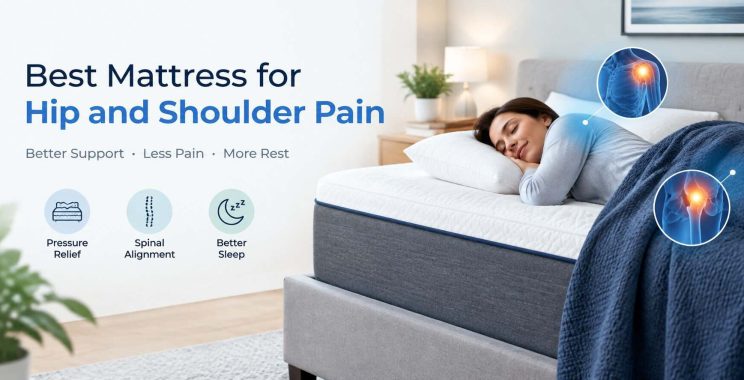
Best Mattress for Hip and Shoulder Pain
Share
Fact checked
Reviewed by experts
 Writers at Sleep Authority are supported by a research team conducting in-depth research about the topics. The editorial team reviews them for accuracy and facts to ensure the most authentic and accurate content is published. Sleep Authority does not offer any medical advice, and you should not rely solely on our content for your course of treatment. Consult your medical professional to discuss any health concerns, chronic conditions, treatment options, or diagnoses.
Updated
September 24, 2026
Quick read
12 mins to read
List of Content
Best Mattress for Hip and Shoulder Pain: How Firmness, Materials, and Alignment Affect Relief
The best mattress for hip and shoulder pain is usually a medium to medium-firm surface—about 5 to 7 on a 10-point firmness scale—with a thick enough contouring layer to cushion the shoulder and the outer hip without letting the waist sag. Side sleepers feel these joints most, because body weight concentrates on a small area of the shoulder and the greater trochanter, the bony point on the outside of the hip. A mattress that is too firm raises peak pressure at those points. A mattress that is too soft lets the midsection drop, twists the lower spine, and can leave the joints aching for a different reason. Construction matters as much as the firmness number: memory foam, latex, and hybrids can all work when the comfort layer and the support core are matched to your sleep position and body weight.
This is a common problem with a mechanical explanation, not a sign that you are sleeping “wrong.” Joint pain at night also feeds a cycle that is hard to break. Pain fragments sleep, and short or broken sleep can increase pain sensitivity the next day. A review in the Journal of Pain describes that two-way relationship between sleep and pain and why treating only one side of it often falls short (Finan, Goodin, and Smith, Journal of Pain, 2013). A better sleep surface will not diagnose or cure bursitis, osteoarthritis, or a rotator cuff injury. It can reduce the pressure and misalignment that keep those symptoms flaring every night, which is a practical place to start while you sort out the medical side.
Why Hips and Shoulders Hurt More in Bed
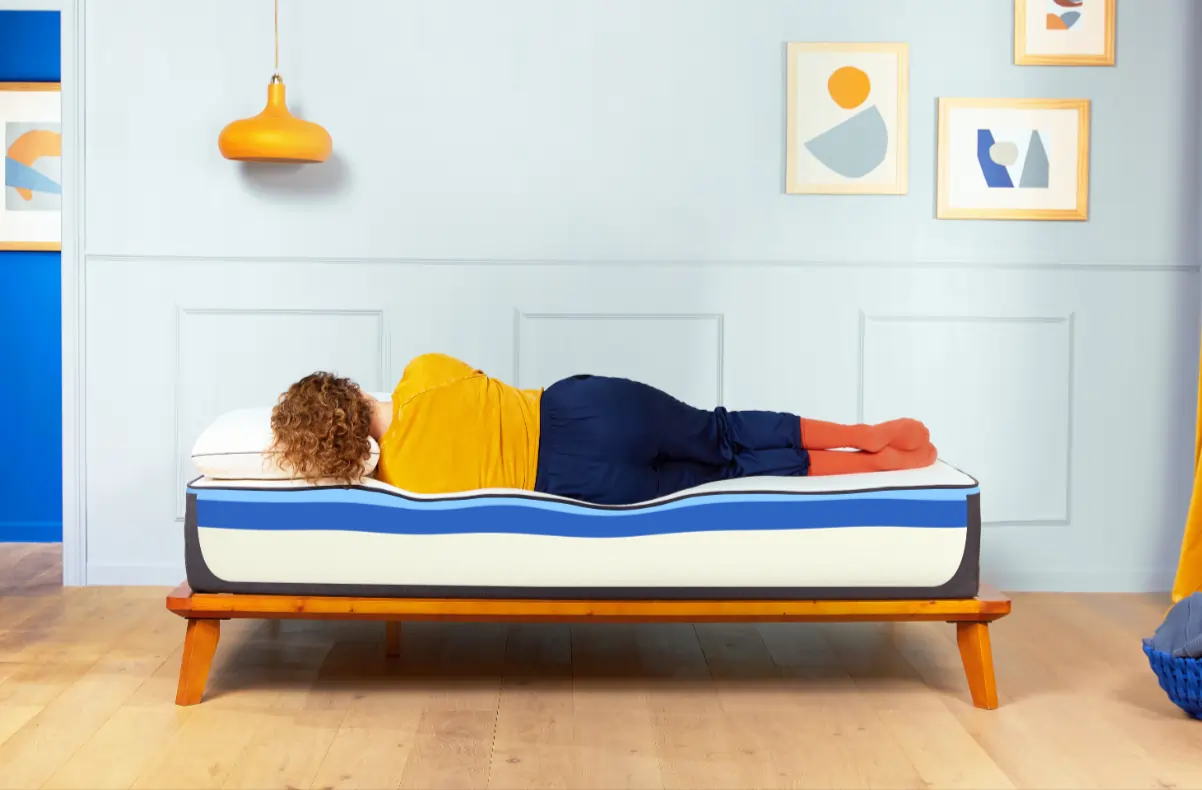
Standing and walking spread load through both legs, the pelvis, and a large area of the feet. Lying down removes that option. On your side, the mattress has to support most of your weight through the shoulder girdle and the lateral hip, with a thinner gap under the waist. Soft tissue over the acromion (the bony tip of the shoulder) and the greater trochanter is relatively thin, so pressure rises quickly. If that pressure stays high for hours, the tissues feel sore, blood flow in the compressed area is reduced, and you wake up needing to roll. If you have already injured the shoulder or developed greater trochanteric pain syndrome, that same load is enough to wake you even when the mattress felt acceptable a year ago.
The other failure mode is alignment, not pressure. In side sleeping, the spine should stay roughly level from the neck through the pelvis, as if a straight line could pass through the ear, the shoulder, and the hip. When the shoulder and hip sink too far and the waist is unsupported, the lumbar spine bends sideways. That lateral bend loads the facet joints and can tug on the muscles that also stabilize the hip. People often describe this as a deep hip ache or a stiff low back on rising, even when the surface felt plush at bedtime. Stomach sleeping creates a third pattern: the hip bones and shoulders take uneven load while the lumbar spine sags into extension, which is why many people with joint pain do better if they can shift off the stomach.
Sleep position data help explain why this complaint is so widespread. Accelerometer studies of adults sleeping at home find that side lying is the dominant position for much of the night (Skarpsno et al., Nature and Science of Sleep, 2017). A mattress chosen for a flat, firm “hotel” feel can be fine for short back-sleeping stays and still be a poor match for someone who spends most of the night on one shoulder.
How Firmness Changes Pressure and Spinal Alignment
Firmness is not a medical grade. It is a subjective rating of how much the surface yields under a typical body. On the usual 1-to-10 scale, 1 is extremely soft and 10 is extremely hard. For hip and shoulder pain, the useful range for many adults is medium (around 5) to medium-firm (around 6 to 7). Lighter side sleepers often do better toward the softer end of that range, because they do not generate enough force to engage a thick, dense comfort layer. Heavier side sleepers often do better toward the firmer end, so the hip does not punch through the comfort layers and land on the rigid support core. That “bottoming out” recreates the high-pressure problem the soft top was supposed to solve.
The research on firmness has focused more on low back pain than on isolated hip or shoulder diagnoses, but the pattern is consistent enough to guide a purchase. A randomized, double-blind trial published in The Lancet followed 313 adults with chronic nonspecific low back pain and compared a firm mattress with a medium-firm mattress. The medium-firm surface produced better outcomes for pain in bed, pain on rising, and disability (Kovacs et al., The Lancet, 2003). A later systematic review of controlled trials reached a similar conclusion: medium-firm designs were among the surfaces most often associated with less pain and better sleep quality, with the caveat that study quality varied (Radwan et al., Sleep Health, 2015). A 2021 review of the mattress literature likewise pointed to medium-firm support as the most reasonable default for reducing back pain and improving sleep, while stressing that spinal alignment and personal factors should refine that choice (Caggiari et al., Journal of Orthopaedics and Traumatology, 2021).
Shoulder pain has been studied directly in bedding research as well. In a trial of adults already diagnosed with low back and shoulder pain, switching to prescribed medium-firm sleep systems was associated with improvements in shoulder pain, back pain, stiffness, and sleep quality (Jacobson et al., Applied Ergonomics, 2010). Worth noting: these studies do not mean a medium-firm mattress treats structural joint disease. They mean that, for many people whose pain is aggravated by the sleep surface, an unyielding firm mattress is not the protective choice it is sometimes marketed as.
In practice, judge firmness by alignment rather than by the label on the website. Lie on your usual side for several minutes. If your shoulder feels a sharp, unyielding pressure and your arm is falling asleep, the comfort layer is too thin or too firm. If your waist collapses and you feel a pinch above the hip, the surface is too soft or the support core is sagging. The goal is a slight cradle at the shoulder and hip with the spine still level.
Sleep Position and Where Pressure Collects
Side sleeping asks the most of a mattress at the shoulder and hip. You need contour under those points—often on the order of two to four inches of a yielding comfort material—plus enough pushback under the waist and lumbar region to keep the spine from bending. A zoned design, with a softer response under the shoulders and a more supportive response through the center third of the mattress, is built around that geometry. Combination sleepers, who rotate between side and back, usually land well in the same medium to medium-firm band, because a surface that is plush enough for the shoulder can still support the spine in back sleeping if the core is stable.
Back sleeping spreads pressure across the upper back, buttocks, and calves, so pure shoulder and hip compression is less of an issue. The risk shifts to a mattress that lets the hips sink and tilts the pelvis. A medium-firm feel with a stable support core generally keeps the natural lumbar curve without forcing the low back into a flat line. Stomach sleeping is the least forgiving position for both the neck and the lumbar spine. If hip pain is what keeps you there, a somewhat firmer surface can limit pelvic drop, but long-term relief usually improves more if you can train toward side or back sleeping. A pillow under the pelvis can be a short-term bridge, not a substitute for a supportive core.
Position also changes what “pain at the shoulder” means. Lying directly on an irritated shoulder compresses the subacromial space and the bursa. If one side is clearly worse, sleeping on the other side, with the painful arm supported so it does not hang forward, often reduces symptoms more than any foam formula. A mattress that allows a modest shoulder sink still helps when you roll onto the sensitive side, because peak pressure is lower than on a board-like surface. The pillow has to match the mattress. Side sleepers need enough loft to fill the space between the ear and the mattress so the neck is not bent toward the lower shoulder. A too-flat pillow on a thick, soft mattress, or a very high pillow on a firm mattress, both pull the neck and can refer discomfort into the shoulder girdle.
Mattress Materials That Relieve Hip and Shoulder Pressure
Memory foam and slow contouring
Memory foam, also called viscoelastic foam, softens in response to heat and pressure and then slowly recovers. At the shoulder and hip it compresses locally, which increases contact area and lowers peak pressure. That is the property that makes foam a frequent match for side sleepers with joint pain. Density matters more than marketing names. Comfort foams around 3 pounds per cubic foot and above tend to hold their contour longer than very light foams, which can soften quickly and let the hip drop. The support layer underneath should be a higher-density, more resilient foam so the comfort layer is not doing structural work it cannot sustain.
The tradeoff is heat and a stuck feeling. Traditional memory foam sleeps warm, and people who already wake to reposition a painful hip may find a slow foam harder to move in. Gel-infused foams and covers with cooling fibers are attempts to move heat away from the body so the foam does not over-soften in the second half of the night. Mattresses like Nectar illustrate the pressure-relief approach in an all-foam build: a gel-infused memory foam layer over specialized support foams, in a medium-firm profile, with a cooling cover. Multiple layers let the top contour the shoulder and hip while the base limits hammocking. That separation—soft where the joints press, stable where the spine needs a reference—is the design principle, not any single brand name. We recommend this kind of layered foam construction when your main complaint is point pressure in side sleeping and you do not need a highly buoyant, easy-to-reposition feel.
Budget does not have to mean an uncertified, overly soft slab. Mattresses like Siena use CertiPUR-US certified foams, a certification that limits certain chemicals and heavy metals in polyurethane foam, along with gel-infused memory foam and a medium-firm feel in both shorter and taller profiles. Taller models, with more foam between you and the base, generally give side sleepers a better chance at pressure relief than a thin quilted top over a hard core. A longer trial still matters at any price. Siena’s 180-night window is shorter than a full year, but it is long enough to judge whether hip and shoulder discomfort is actually changing, which is the outcome that counts.
Latex and a more responsive cradle
Natural latex, particularly Dunlop latex, is elastic rather than slow-moving. It compresses under the hip and shoulder and rebounds immediately, so you are less likely to feel trapped when you need to roll off a painful joint. Point elasticity—the ability of one area to compress without dragging the surrounding surface down—can cradle a shoulder while the rest of the mattress stays supportive. Latex is also more breathable than dense memory foam, which helps people whose pain makes them restless and warm.
Firmness still governs whether that responsiveness helps or hurts. A luxury-firm latex hybrid can be an excellent match for back sleepers, heavier bodies, and anyone who wants lift under the waist. It can be too firm for a light side sleeper whose shoulder never gets past the surface. Natural latex mattresses like Awara pair GOLS-certified organic Dunlop latex with individually wrapped coils, organic cotton, and wool that acts as a natural fire barrier and a moisture buffer. Depending on the model, the latex comfort layer runs about two to four inches over a coil core, with a luxury-firm feel around 6.5 out of 10. That profile shows how latex solves the “easy to turn” problem. It also shows why you should match feel to body type: if you are a lighter side sleeper with prominent shoulder pain, a thicker or softer comfort layer will usually relieve pressure better than a firm latex top, even when the materials themselves are high quality.
Hybrids, coils, and zoned support
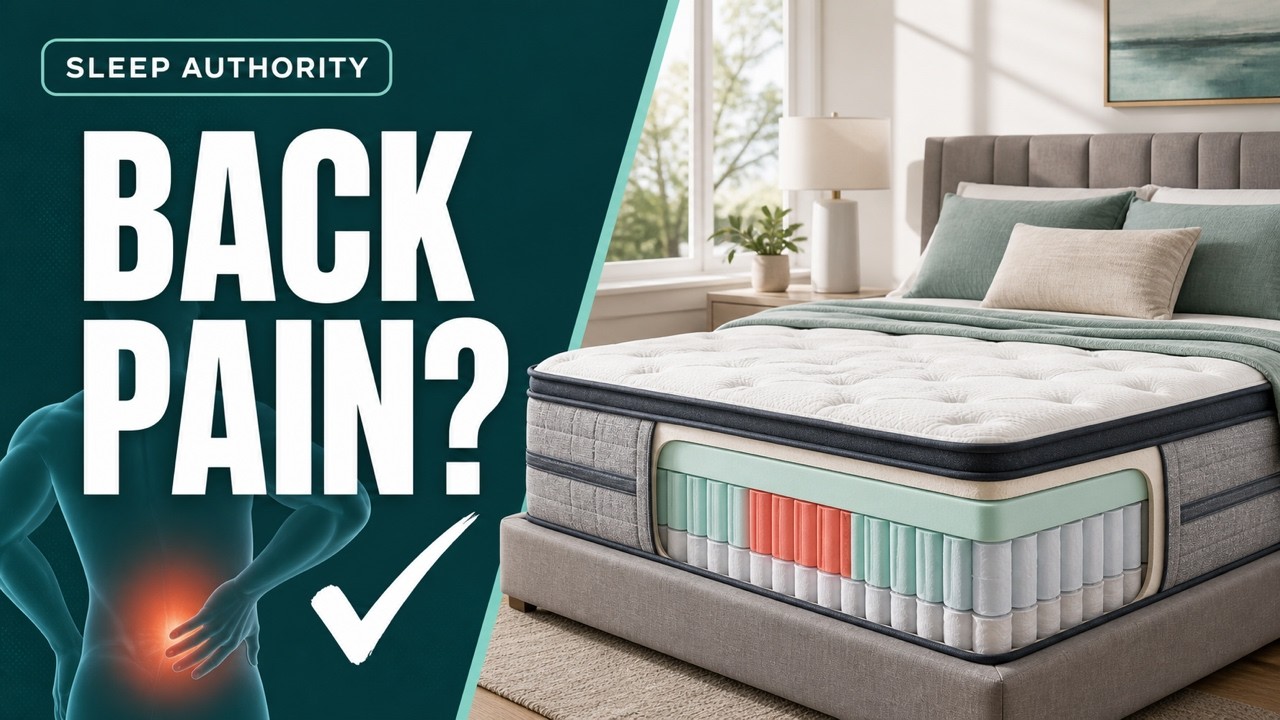
A hybrid places a foam or latex comfort system over a coil core. Individually wrapped coils (also called pocketed coils) compress somewhat independently, which improves motion isolation—the mattress’s ability to absorb movement so a partner’s turn does not reach you—and allows different zones to be tuned. Stronger coils through the center support the lumbar area and heavier hips. Slightly more giving coils under the shoulders let that joint sink a little. That zoning is one of the more direct construction answers to hip and shoulder pain, because it treats the two problems (pressure and alignment) in different parts of the same mattress.
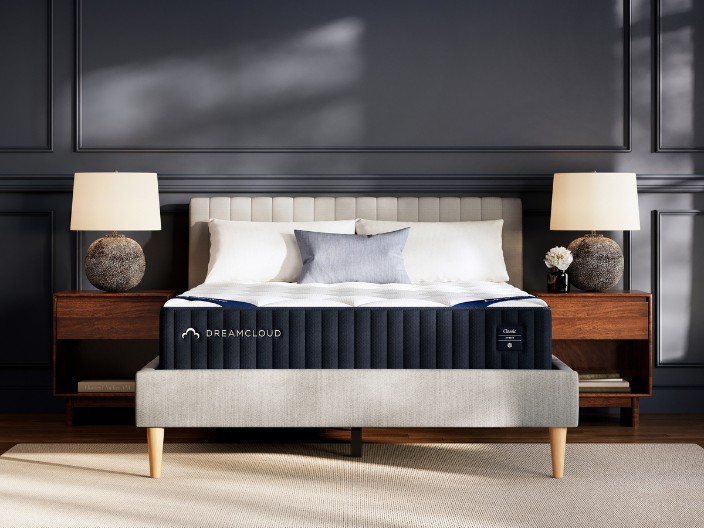
Coils also add airflow. People with joint pain often sleep in fragments, and a surface that traps heat can add awakenings that have nothing to do with the joint itself. Luxury hybrids like DreamCloud combine pressure-relieving memory foam with individually wrapped coils, and higher models add features such as zoned support and phase-change material in the cover, which absorbs heat as it shifts from solid to liquid-like state. We love how that hybrid split works for hip and shoulder pain: the foam handles the local contour at the joints, and the coil core keeps the spine from collapsing once the foam has done its job. Hybrids are also a reasonable shared surface when one partner needs pressure relief and the other needs a more supportive feel, provided the overall firmness stays in the medium to medium-firm range rather than drifting soft.
All-foam and hybrid builds can both meet the biomechanical brief. Choose foam if you want maximum contour and strong motion isolation and you sleep in a cooler room or on a bed with good airflow. Choose latex or a latex hybrid if turning over is painful and you want an immediate response. Choose a zoned hybrid if your pain is a mix of shoulder pressure and a waist that sags on softer beds. None of these materials is inherently therapeutic. The useful question is whether the comfort layer yields at the shoulder and greater trochanter while the support core holds the spine level for your weight.
Match the Mattress to Body Weight and How You Shop
Body weight changes how any firmness rating feels. Under about 130 pounds, many “medium-firm” beds sleep firmer than the label suggests, because there is not enough load to compress the comfort layer. Look for a softer initial feel, a thicker contouring top, and a coil gauge or foam density that still recovers rather than collapsing. Between roughly 130 and 230 pounds, the medium to medium-firm range described above is the most reliable starting point for hip and shoulder pain. Above about 230 pounds, prioritize a strong support core—higher-density base foams or a robust coil unit—and a comfort layer thick enough that the hip never reaches that core. A soft top over a weak base feels pleasant for a week and then develops a body impression that drops the hip and recreates pain.
Age of the current mattress is part of the diagnosis. Most mattresses lose meaningful support somewhere in the 7-to-10-year range, sooner if the comfort foam was low density or if the sleeper is heavier. A visible sag, a valley where you sleep, or a new need to prop the hip with extra pillows usually means the support core has failed. A two-to-three-inch memory foam or latex topper can add pressure relief to a mattress that is still flat and simply too firm. It will not repair a sagging core. In that case the topper follows the valley, and the hip pain continues.
Shopping details that actually predict success are less glamorous than fabric claims. Confirm the firmness on a defined scale, the thickness of the comfort layers, whether support is zoned, and whether foams carry a meaningful certification such as CertiPUR-US or, for latex and textiles, GOLS and GOTS. Ask about fiberglass-free construction if you are opening the cover. Plan on at least three to four weeks of consistent use before you judge pain, unless symptoms clearly worsen, in which case stop. Muscles and sleep habits adapt slowly, and a single night in a showroom cannot reproduce your shoulder load at 3 a.m. Long trials exist for this reason. DreamCloud, Nectar, and Awara offer 365-night trials; Siena offers 180 nights. Use the window. Track whether you are waking less often to roll off the hip or shoulder, not whether the bed feels novel.
Edge support and height matter if hip pain makes getting in and out of bed difficult. A stable perimeter and a sleep surface you can sit on with both feet on the floor reduce the twist through the hip as you stand. That is a functional feature, not a luxury extra, for anyone who is guarding a joint at night.
When a Mattress Change Is Not Enough
A well-chosen mattress reduces mechanical stress. It does not replace an exam when the pain has a medical driver. Pain that wakes you and does not ease when you change position, pain with weakness or numbness in the arm or leg, pain after a fall, visible swelling, fever, or unexplained weight loss needs clinical attention rather than another round of mattress research. Shoulder pain that is worse when you lift the arm, or hip pain that is sharp when you lie on the side and also limits walking, may reflect rotator cuff disease, bursitis, or arthritis. Treating only the mattress in those cases delays care that could matter more.
Even with a clear mechanical picture, the mattress is one variable. A supportive side-sleep pillow, a small pillow in front of the trunk so the top arm does not drag the shoulder forward, and a brief change away from the most painful side often do as much in the first week as a new bed. Keep the room cool enough that you are not waking from heat and then noticing the joint. If pain has lasted more than a few weeks, ask a clinician whether imaging, physical therapy, or medical treatment belongs in the plan. Use the mattress decision to remove an obvious aggravating factor, not as a substitute for that conversation.
Key Takeaways
- For most adults with hip and shoulder pain, start with a medium to medium-firm mattress (about 5 to 7 out of 10) that contours at the shoulder and outer hip while keeping the spine level.
- Side sleepers need more pressure relief than back or stomach sleepers; lighter bodies usually need a softer, thicker comfort layer, and heavier bodies need a stronger core so the hip does not bottom out.
- Memory foam excels at local pressure relief, latex makes repositioning easier, and zoned hybrids can cushion joints while supporting the waist—construction should match how you sleep, not a generic “best” label.
- Research on medium-firm surfaces, including trials in back pain and in combined back and shoulder pain, supports avoiding an overly firm mattress when joints hurt at night.
- Give a new mattress several weeks unless pain worsens, and see a clinician for night pain that does not change with position or comes with weakness, numbness, swelling, or other red flags.
A Practical Way Forward
Hip and shoulder pain at night is usually a pressure-and-alignment problem layered on top of whatever the joint itself is doing. You do not need the hardest mattress you can tolerate, and you do not need a sink-in surface that lets the waist collapse. You need a medium to medium-firm build that yields under the shoulder and greater trochanter, holds the spine roughly straight, and matches your weight so those layers still work at 4 a.m. Foam, latex, and zoned coil designs can each do that job when the comfort layer and the support core are specified clearly.
Use the trial period as the real test: fewer awakenings to escape a painful shoulder or hip, and less stiffness when you stand up. Pair the mattress with a pillow that keeps the neck neutral, and do not wait on a new bed if the pain looks medical. A surface that respects the shape of a side-sleeping body will not erase every diagnosis, but it removes a nightly stress those joints do not need.
This website does not offer medical advice nor professional medical services; rather, it is provided solely for educational, informational, and/or entertainment purposes. Individuals seeking medical advice should consult a licensed physician. The information provided should not be used for diagnosis or treatment of any condition, disease, or injury. When you have a medical condition, you should always talk to licensed doctor or other certified medical professional. You should never delay seeking professional medical advice or treatment based on the contents of this website. Call 911 or immediately go to the nearest emergency room if you think you may have a medical emergency. The contents of this website are provided “as-is”, Sleep Authority and its parent, subsidiaries, affiliates, employees, contributors disclaim any warranty of the information contained herein. Please contact using contact form to report any errors, omissions, misinformation, or abuse.